
Winter Sun Escapes: Where to Fly When Tel Aviv Gets Cold
Winter Sun Escapes: Where to Fly When Tel Aviv Gets Cold
Let me paint you a picture. It's January in Tel Aviv. It's been raining for three days straight. Your apartment has no central heating because "it never gets cold here" (the lie every Israeli landlord tells). You're wearing two hoodies, the electric space heater is losing the war against your single-pane windows, and your group chat is 90% complaining about the weather and 10% arguing about which shawarma place is best. Standard.
Here's the thing nobody outside Israel understands: Israeli "winter" is only about two months of actual unpleasantness — mid-December through mid-February. It's not Scandinavian darkness. It's not Russian frozen-pipes misery. It's just... grey. Wet. Annoyingly not warm enough for the beach but not cold enough to justify the dramatic suffering everyone performs on Instagram.
The solution? Leave. And thanks to Ben Gurion's ridiculous connectivity — we track 33,193 flights in the Wingly database — you have options from budget-mild to tropical-paradise to desert-guaranteed-sun. Let's break down exactly where to fly when Tel Aviv decides to be dreary.
The Guaranteed Sun: Dubai and Eilat
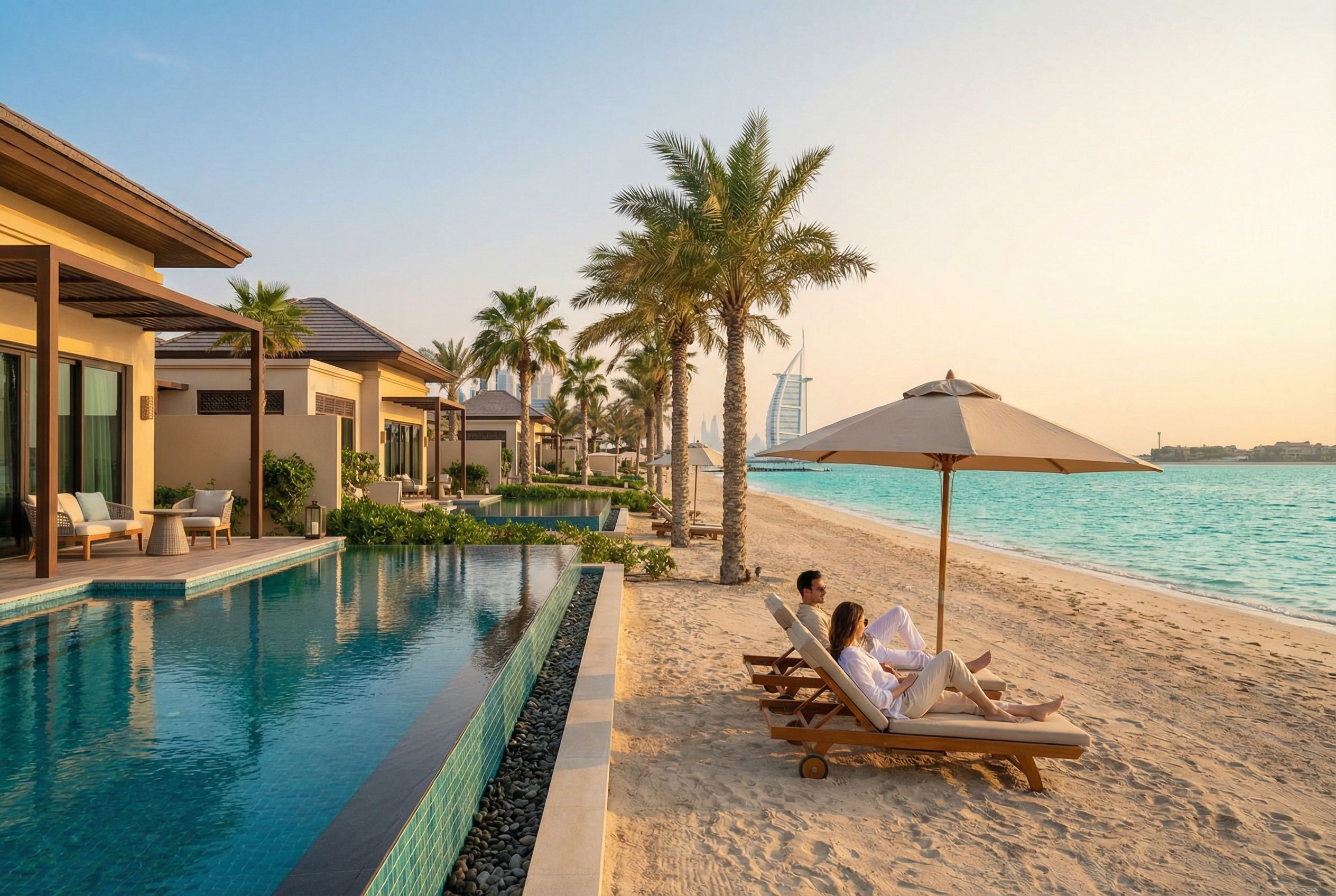
Dubai — 2,122 Flights, Zero Percent Chance of Rain
I'll start with the obvious. Dubai in winter is perfect. Not "tolerable," not "warm-ish" — genuinely perfect. 25-30C, sunny every single day, low humidity, and zero chance of the weather ruining any plan you make. This is Dubai's peak season for a reason.
And getting there could not be easier. With 2,122 UAE flights in our database, it's the most-connected warm destination from Ben Gurion by a massive margin. The airline competition is fierce:
- FlyDubai (589 flights) — Your budget pick. Competitive fares, 3-hour flight, perfectly adequate for a quick sun fix.
- Emirates (531 flights) — The premium play. Better service, but for a 3-hour flight, is it worth double the price? Probably not. Fight me.
- El Al, Etihad, Arkia, Israir — All serving the route, all competing on price. When six airlines fight over one route, your wallet wins.
Winter is Dubai's high season, so hotel prices are higher than summer. But here's the thing — summer Dubai is a literal oven where you sprint between air-conditioned boxes. Winter Dubai is the version where you actually use the beach, walk outside, eat at outdoor restaurants, and don't melt. The premium is worth it.
The 3-hour escape factor: This is Dubai's killer advantage over every tropical destination on this list. You can leave Ben Gurion Thursday afternoon and be poolside before dinner. Try that with Thailand.
Insider Tip: January-February is Dubai Shopping Festival season — citywide sales, entertainment, and fireworks. If you're going anyway, time it right. Hotel prices spike during DSF weekends, but midweek stays are still reasonable. Check flight options on our Dubai destination page.
Eilat — The Domestic Cheat Code
Don't overlook the obvious. Eilat in winter averages 20-22C and gets maybe 3 rainy days the entire season. Yes, it's Eilat, and yes, you've been there seventeen times. But a 50-minute flight (or 4-hour drive) to guaranteed sunshine with no passport, no security paranoia, and no currency exchange has its appeal.
The honest take: Eilat is the aspirin of winter escapes. It's not exciting, but it works, it's cheap, and it's fast. Save the exotic destinations for when you have actual vacation time. Eilat is for the "I need sun THIS weekend" emergencies.
The Tropical Escape: Thailand and Beyond
When two months of gray Tel Aviv sky isn't enough and you need a full reset — palm trees, turquoise water, the smell of lemongrass, and the feeling that you've genuinely gone somewhere — the tropics are calling.
Thailand — 491 Flights to Paradise
Bangkok (439 flights) and Phuket (52 flights) are the obvious plays, and December through February is Thailand's best season. Dry, 30C+, clear skies, calm seas. It's the anti-Tel-Aviv-winter in every possible way.
The flight is 10-11 hours, which isn't trivial. But here's the math that makes it work: a two-week Thailand trip where the flight is your biggest expense and everything on the ground — food, hotels, transport, activities — costs a fraction of what you'd spend in Israel. You can eat world-class pad thai for 5 shekels. Your beachfront bungalow costs less than a parking spot in Tel Aviv. The economics of Thailand in winter are absurd.
El Al and Thai Airways both run direct flights. The seasonal demand from Israelis means decent frequency during peak winter months. Book 2-3 months ahead for the best prices, because every Israeli and their mum has the same idea in January.
Insider Tip: If you can only swing 8-10 days, do Bangkok (3 days) + one island destination (Koh Lanta for chill, Phuket for variety, Koh Samui for resort vibes). Don't island-hop with less than two weeks — you'll spend more time on boats and transfers than on beaches. Explore options on our Thailand destination page.
The Dubai Connection: Maldives, Sri Lanka, Seychelles
Here's a hack that most Israelis sleep on. Dubai isn't just a destination — it's a hub. Those 2,122 UAE flights mean cheap, frequent access to the Gulf, and from there, short flights fan out across the Indian Ocean.
- Maldives — 4-hour flight from Dubai. The honeymoon cliche that actually lives up to the cliche. December-March is peak season (dry, sunny, warm water). Yes, it's expensive. Yes, overwater bungalows are a real thing and they're as good as the photos.
- Sri Lanka — 4.5-hour flight from Dubai. Dramatically cheaper than the Maldives, incredibly diverse (beaches, mountains, temples, wildlife, tea plantations), and winter is prime season for the west and south coasts. This is the underrated pick on this list.
- Seychelles — 4-hour flight from Dubai. If your budget allows it, the beaches here are genuinely the most beautiful on Earth. Not hyperbole.
The play: Book a cheap FlyDubai flight to Dubai, spend 1-2 nights (optional), then connect onward. Total transit time is comparable to flying to Thailand, and you end up somewhere most of your friends haven't been.
The Mild Mediterranean: Not Hot, But Not Miserable
Not everyone needs 30C and palm trees. Sometimes "not raining" and "15 degrees warmer than Tel Aviv right now" is enough. These destinations won't give you a tan, but they'll cure the winter blues without a 10-hour flight.
Cyprus — 445 Flights, One Hour Away
Winter Cyprus is mild. Let's set expectations: you're looking at 15-18C, partly cloudy, occasional rain. This is not beach weather. But it IS "walk around Paphos in a light jacket, drink wine at a hillside taverna, explore Troodos mountain villages" weather. And at one hour from Ben Gurion with 445 flights tracked, nothing is more convenient.
The winter angle: Cyprus is absurdly cheap in winter compared to summer. Hotels that charge 200 EUR/night in August go for 60-80 EUR in January. The island is empty. Restaurants are happy to see you. If you want a quiet, European-feeling long weekend without breaking the bank, winter Cyprus is it.
Skip Ayia Napa in winter. It's a ghost town. Limassol and Paphos are where the life is year-round.
Canary Islands — The European Secret Weapon
If you want guaranteed mild-to-warm (20-24C) with European infrastructure and no jet lag, the Canary Islands are the move. Tenerife and Gran Canaria have direct or one-stop flights from Israel, and they deliver something rare: genuine warm winter without going long-haul.
These are volcanic islands off the coast of Africa that happen to belong to Spain. That means EU healthcare with EHIC, familiar food, good roads, and beaches that range from golden sand to volcanic black. February in Tenerife while Tel Aviv is drowning? 22C and sunny. It almost feels like cheating.
The downside: Connections. There aren't many direct flights, so you're usually routing through a European hub. But a 2-hour hop to Athens or Rome plus a 3-4 hour onward flight still beats 10 hours to Thailand.
Morocco — The North African Wildcard
Marrakech in winter averages 18-20C with plenty of sunshine. It's a 5.5-hour flight, sometimes with good direct options, and the experience is completely unlike anything in Europe or the Gulf. The souks, the riads, the Atlas Mountains dusted with snow in the background while you eat tagine on a rooftop — it's atmospheric in a way that Dubai's glass towers simply aren't.
Budget-friendly too. Morocco is significantly cheaper than Israel for food, accommodation, and activities. A stunning riad in the medina runs 60-120 EUR/night. A full day in the hammam costs less than a coffee at TLV Sarona.
Insider Tip: Don't just do Marrakech. The Sahara desert is a 1-day drive (or short internal flight to Ouarzazate), and spending a night in a desert camp under the stars in winter — cold, clear, absolutely silent — is one of those travel experiences that rewires your brain. The desert is actually more comfortable in winter than summer, when daytime temperatures are brutal.
The Off-Season Hack: Europe Is CHEAP in Winter
Okay, this is the section for the budget-conscious travelers who aren't necessarily chasing warmth. Because here's a secret the airline industry doesn't advertise: European cities in January-February are the best travel deal on the planet.
Rome. Barcelona. Paris. Lisbon. These cities are miserable to visit in August — crowds, heat, inflated prices, three-hour lines for every museum. In January? Same cities, 20% of the tourists, 40-60% of the hotel prices, no lines, and restaurants that actually have tables available.
The Numbers Don't Lie
Our flights board shows massive connectivity to European hubs year-round, and winter fares crater because demand drops from Israeli holidaymakers who all want beaches. A January flight to Rome that costs 600-800 NIS? That same flight in August is 1,500+.
Best winter city picks:
- Rome (15C, occasional rain) — Empty Vatican, no line at the Colosseum, the best carbonara of your life eaten in a trattoria where you're the only tourist. Winter Rome is elite.
- Barcelona (12-15C, mostly dry) — La Boqueria market without fighting through cruise ship crowds. Gaudi without selfie sticks blocking every angle. Actually affordable tapas crawls.
- Lisbon (14-16C, mild and sunny-ish) — Portugal's capital is warm-ish even in winter, the pastel de nata are eternal, and the city has an energy that doesn't depend on beach weather.
- Paris (5-8C, grey) — Cold? Yes. But Paris in winter with the lights, the museums, the cafes, the hot chocolate at Angelina's while rain streaks the windows? There's a reason artists moved here, and it wasn't for the summer humidity.
The catch: You're not getting a tan. You're packing a proper coat. But you're seeing world-class cities in their most authentic, livable state, without competing with 10 million other tourists. And the savings are real — we're talking 30-50% less on flights AND hotels compared to peak season.
Insider Tip: Combine a winter city break with a beach stop. Fly to Barcelona for 3 days, then take a 30 EUR Vueling flight to Tenerife for 4 days of actual warmth. Best of both worlds. Budget carriers within Europe make multi-stop winter trips embarrassingly affordable.
The Long-Haul Dreams: Zanzibar, Goa, Colombia
Got two weeks or more? Here's where things get interesting. These aren't quick weekend fixes — they're full-blown winter escapes for when you're serious about leaving the grey behind.
Zanzibar, Tanzania
Via Addis Ababa (305 flights tracked). Ethiopian Airlines connects Tel Aviv to basically all of East Africa through its Addis Ababa hub, and Zanzibar is the jewel of the connection. White sand beaches, spice tours, Stone Town's narrow alleys, and 30C+ weather while your friends back home argue about who has the better space heater.
December through February is technically the "short rains" shoulder period, but in practice the showers are brief afternoon bursts that clear fast. The island is less crowded than during peak dry season (July-September) and hotel prices reflect it.
Goa, India
India is intimidating for first-timers, but Goa is the gentle introduction. It's basically a beach state with Portuguese colonial architecture, excellent seafood, legendary trance parties (if that's your thing), and a cost of living that makes Thailand look expensive. November through February is prime season — dry, warm, perfect.
Getting there usually involves a connection through Mumbai (short domestic hop) or via the Gulf. Not the quickest journey, but for a 10-14 day trip, the travel time melts into irrelevance once you're watching sunset over the Arabian Sea with a 30-shekel fresh fish dinner in front of you.
Colombia
The dark horse on this list. Cartagena and the Caribbean coast deliver 30C+ heat, stunning colonial architecture, incredible food, and a travel scene that's exploded in popularity over the last five years. December through March is dry season — perfect weather.
The reality check: Colombia is far. We're talking 14-16 hours of travel with connections, usually through Madrid or Miami. This is not a weekend trip. But for a 2-3 week winter escape, the combination of culture, food, beaches, and the sense of adventure is unmatched by anything on the Mediterranean.
Insider Tip: Zanzibar via Ethiopian Airlines is the best-value long-haul winter escape from Israel. The Addis Ababa connection is efficient (short layover), the flights are reasonably priced, and the destination itself is cheap. For the price of a week in Dubai, you get two weeks in Zanzibar. The math is simple.
Practical Winter Travel Tips
Packing by Destination
Desert/Gulf (Dubai, Eilat): Light summer clothes plus one light layer for over-airconditioned malls. Sunscreen. Sunglasses. You know this.
Tropical (Thailand, Sri Lanka, Maldives): Same as above, plus mosquito repellent (non-negotiable), a rain shell just in case, and reef-safe sunscreen if you plan to snorkel.
Mild Mediterranean (Cyprus, Morocco, Canaries): Layers. Seriously. A 17C day in Paphos is beautiful in the sun and genuinely chilly in the shade. Light jacket, one warm layer, comfortable walking shoes, and something for occasional rain.
European cities (Rome, Barcelona, Paris): Proper winter clothes. Coat, scarf, warm shoes. You're walking 15,000 steps a day on cobblestones. Comfort beats fashion. Pack for the weather, not the Instagram.
The Holiday Pricing Trap
Winter travel from Israel comes with a brutal pricing calendar:
- Hanukkah — Prices spike. Schools are off, families travel, airlines know it. Book 2+ months ahead or accept the premium.
- Christmas/New Year — Double whammy. Israeli demand (school holidays) plus global demand (literally everywhere is peak). This is the most expensive two weeks of winter, full stop.
- January 10 onwards — The magic window. Holidays are over, schools are back (sort of), and airlines are desperate to fill planes. This is when the real deals appear. If your schedule is flexible, mid-January through mid-February is the sweet spot for winter escape pricing.
- Passover (spring) — Not technically winter, but worth noting: if Passover falls early (March), it creates another price spike. Check the Hebrew calendar before booking.
The Weekend vs. Full Week Calculation
Be honest with yourself about how much time you have:
- Long weekend (Thu-Sun): Dubai, Eilat, Cyprus. Nothing else makes sense for 3-4 days. Don't waste a third of a short trip on airports and flights.
- One week: Canary Islands, Morocco, European city break. Enough time to actually experience a place without rushing.
- 10-14 days: Thailand, Sri Lanka, Goa. This is where the long-haul destinations justify the flight time.
- Two weeks+: Zanzibar, Colombia, multi-destination combos. You're genuinely escaping winter, not just taking a break from it.
The Bottom Line: Best Winter Escape by Budget and Trip Length
Enough talking. Here's the cheat sheet.
Cheapest overall: European city in January (600-800 NIS flights + cheap hotels). You'll be cold, but your wallet will be warm.
Best value for warmth: Cyprus long weekend. One hour, 400-750 NIS round trip, mild-but-sunny, and cheaper than staying in Tel Aviv for the weekend once you factor in the entertainment.
Best guaranteed heat: Dubai. 25-30C every single day, 3-hour flight, massive airline competition. This is the safest bet on the list. No weather risk, no monsoon surprises, no "partly cloudy actually means all-day rain."
Best for a real escape: Thailand, December-February. 491 flights, tropical perfection, and costs that make your shekel feel like it tripled in value. This is the trip that makes the other 10 months of work feel worth it.
Best for adventurous travelers: Zanzibar via Ethiopian Airlines or Sri Lanka via Dubai. You'll come back with stories that aren't "yeah, we went to the Dubai Mall again." Trust me on this one.
The secret weapon: Mid-January to mid-February, any destination. Post-holiday prices, empty hotels, fewer tourists everywhere. This is the real insider move — not where you go, but when.
Israeli winter is short, but it's annoying enough to justify an escape. You've got a passport, Ben Gurion has 33,193 flights to basically everywhere, and the only thing standing between you and warm sunshine is the willingness to actually book something instead of just complaining about the rain in the group chat.
Pick your budget. Pick your timeline. Check the flights board. Book it.
The rain will still be here when you get back.
Yalla, escape.
Flight data sourced from Wingly's flight tracker, covering 33,193 flights from Ben Gurion Airport. Updated regularly from official Israeli aviation data. Warm destination stats: UAE (2,122 flights), Thailand (491 flights), Cyprus (445 flights), Ethiopia/Addis Ababa (305 flights). Check real-time availability on our destinations page.